
Let's cut through the noise. Compaction rollers all do one thing—they press dirt down so it stops moving. But how they do it, and what they're good at, is totally different.
Show up with a smooth drum on heavy clay and you'll spend all day watching it bounce while the soil laughs at you. Bring a padfoot roller to finish asphalt and you'll leave a trail of divots that'll cost a fortune to fix. Wrong tool, wrong result, wrong day.
The difference between a job that lasts and a job that fails usually comes down to about two feet of soil that's either solid or not. And that's on you.
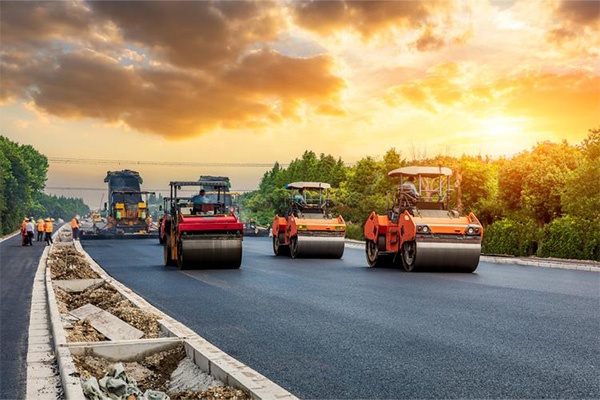
These are your go-to for granular stuff—sand, gravel, crushed rock. That smooth steel drum rolls across the surface and presses everything down flat. You see them on road jobs, parking lots, anywhere you need a clean finish. They're fast, they cover ground, but they're useless on sticky clay because the material just sticks and they can't get any depth .
These look mean because they are mean. Those lumps or "feet" on the drum dig right into cohesive soils—clay, silt, stuff that wants to hold together. They knead the soil like bread dough, working air pockets out from the bottom up . Perfect for foundations and embankments where you need deep compaction. Downside? They leave a rough surface that needs finishing.
These use rubber tires instead of steel drums. The tires kinda squeeze and knead the material, which works weirdly well for both granular and mixed soils . They're common on asphalt finishing and chip seal work because they don't fracture the stone . Plus, you can add ballast to make them heavier when you need more oomph.
Two drums, one front one back. These are the asphalt specialists. They give you double the compaction in one pass and leave that smooth finish everyone wants on pavement . Some guys use them on soil too, but they really shine on blacktop.
One drum up front, tires in back. These are your all-around soil machines. They're stable on rough ground, climb slopes decent, and you can get them smooth or padfoot depending on what you're dealing with .
Here's where people get confused. Vibratory rollers shake while they roll—that vibration settles particles tighter and gets you deeper compaction faster . Static rollers just use weight. For granular soils, vibration works magic. For stuff that's sensitive, or when you're afraid of crushing aggregate, static might be the call .
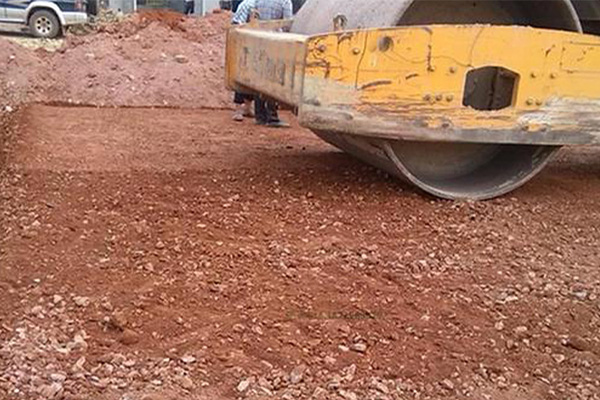
Before you even think about rollers, grab a handful of soil. Squeeze it. Does it crumble? That's granular—sand, gravel. Does it hold together like play-dough? That's cohesive—clay, silt.
This one test tells you more than any spec sheet.
Granular soils (sand, gravel, crushed rock) want smooth drums with vibration. The shaking gets particles to settle and lock together .
Cohesive soils (clay, silt) need that kneading action. Padfoot or sheepsfoot all the way .
Mixed soils are trickier. Pneumatic tire rollers often handle them best because the tires adapt .
Thick lifts need more power. If you're compacting six inches at a time, a small roller might do. If you're pounding down two feet of fill, you need weight and vibration and probably multiple passes .
Here's a rough guide from guys who do this daily :
Residential driveways: 1.5 to 3 tons for 1-2 inch lifts, 3 to 5 tons for 2-3 inch lifts
Small to medium parking lots: 3 to 5 tons for 2-3 inch lifts, 8 tons for 4 inch lifts
Patchwork: 1.5 to 3 tons for 1-2 inch lifts
Those aren't carved in stone, but they'll keep you out of trouble.
Tight alley behind a row of houses? You're not getting a 10-ton tandem roller in there. That's walk-behind territory, or maybe a small ride-on with articulated steering .
Wide open highway job? Bring the big iron. Wider drums mean fewer passes, which means you get done faster .
Road work typically uses drums in the 66 to 84 inch range—wide enough to cover a lane in two passes but still legal to haul . Smaller jobs get by with 28 to 56 inch drums.
Roads and Highways:This is where specs get tight. You've got density requirements, smoothness standards, and usually a inspector watching every pass. Double drum vibratory rollers are standard for asphalt. For soil base, single drum vibratory with padfoot or smooth depending on material .
Parking Lots:Similar to roads but usually lighter. You can get away with smaller machines, but don't go too small or you'll be there forever. A 3 to 5 ton roller covers most parking lot work .
Driveways and Residential:Small is fine. You need maneuverability more than massive weight. A 1.5 to 3 ton machine will do driveways all day. Walk-behinds work for really tight spots .
Foundations and Structural Fill:This is where compaction really matters. You're building on this. Padfoot rollers for clay, smooth drum vibratory for granular, and don't skimp on passes. Multiple thin lifts beat one thick lift every time .
Amplitude and Frequency:If you're running vibratory, these matter. Amplitude is how far the drum moves up and down. Higher amplitude for thick layers and tough material. Lower amplitude for thin lifts and delicate mixes .
Frequency is how fast it vibrates. Higher frequency lets you roll faster without losing compaction quality .
Static Linear Load:This is just fancy talk for how much weight is pressing down per inch of drum. Higher number means more compaction force. Check it against what you're compacting.
Maintenance and Fuel:Diesel is standard on big machines—powerful and efficient for long days . Small machines sometimes run gas. Electric is coming but not there yet for heavy work.
Ask about maintenance before you rent or buy. Machines that've been beat to hell won't perform. Check scrapers, hydraulic systems, and whether parts are easy to get .
Operator Skill:Some rollers are simple. Some take finesse. If you've got a green operator, maybe don't hand them the most complicated rig. Pneumatic tire rollers especially take some learning .
Here's the deal in plain English:
Look at your dirt. If it's sandy or gravelly, smooth drum with vibration. If it's clay or silt, padfoot all the way. If it's mixed, pneumatic tires might save you.
Figure out how deep you're going. Thicker lifts need heavier machines.
Look at your space. Tight spots need small rollers. Open ground needs wide drums to get done faster.
Check what you're building. Roads have specs. Driveways have space limits. Foundations can't fail.
And for heaven's sake, don't guess. Talk to people who've done it before. Read the machine specs. Make a few passes and check the density. It's cheaper to figure it out at the start than to fix a failed slab later.
A: You can try, but you'll be there all day and it won't work well. Clay needs that kneading action from a padfoot or sheepsfoot roller to get density . Smooth drums just ride on top.
A:Honestly, most guys use the terms interchangeably these days. Technically, sheepsfoot has smaller, more closely spaced feet, but modern machines blur the line. Both are for cohesive soils .
A: Depends on lift thickness, soil type, and roller weight. General rule: 4 to 8 passes. Check density as you go. When it stops changing, you're done. More passes won't help after that .
A:Not always. Vibration gets you deeper compaction faster, but on thin lifts or sensitive materials, static mode might be better. Good vibratory rollers let you turn it off when you want .
A:For a residential driveway, 1.5 to 3 tons is plenty. Maybe 3 to 5 if you're doing thick lifts. Don't bring a highway machine—you'll never get it positioned and you'll wreck the edges .
A:Field density tests are the real answer, but on small jobs, watch the roller. When the drum starts bouncing instead of settling, you're probably there. Or do the proof roll—drive a loaded truck over it. If it doesn't rut, you're good .






